Midnight Spins and Empty Wallets: The Science of Late-Night Loss Chasing
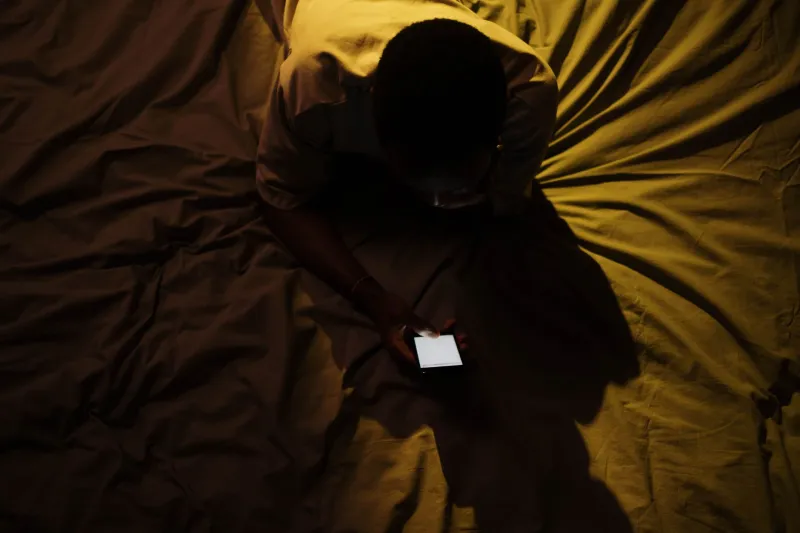
It starts innocently enough. You're winding down after a long Tuesday, phone in hand, spinning a few reels before bed. An hour later, you're down $60, it's 1:30 AM, and some stubborn voice in your head is whispering that the next spin is the one that turns it all around. Sound familiar?
You're not alone — and you're not weak-willed. What you're experiencing has a name, a measurable neurological basis, and a very real relationship with the time on your clock. Late-night gaming sessions don't just feel riskier. According to behavioral researchers, they genuinely are riskier, and the online casino industry's 24/7 availability makes the problem uniquely modern.
Your Tired Brain Is Not Your Friend
Here's the core issue: sleep deprivation — even the mild, chronic kind most Americans carry around — directly impairs the prefrontal cortex, the part of your brain responsible for judgment, risk assessment, and impulse control. Studies from the University of Pennsylvania have shown that even 17 to 19 hours without sleep produces cognitive impairment comparable to a blood alcohol level of 0.05%.
You don't have to pull an all-nighter to feel this. By 11 PM for most working adults, the brain is already operating in a compromised state. Decision-making slows. Emotional regulation weakens. And critically, the tendency to overestimate the likelihood of a win — what psychologists call "optimism bias" — spikes when we're exhausted.
In other words, tired players don't just make worse decisions. They feel more confident about those worse decisions. That's a rough combination when a slot machine is sitting in your pocket, always on, always ready.
The Circadian Rhythm Factor
Your body runs on a roughly 24-hour internal clock — the circadian rhythm — that governs everything from hormone release to alertness levels. Between roughly 10 PM and 2 AM, most people's bodies are actively signaling it's time to shut down. Melatonin production increases. Core body temperature drops. The brain starts consolidating the day's memories.
Fighting that signal takes mental energy. And the more mental energy you spend staying awake, the less you have available for rational decision-making. Researchers at the Sleep and Cognition Lab at Brigham and Women's Hospital in Boston found that decision-making under circadian misalignment — basically, being awake when your body wants to sleep — significantly increases risk-taking behavior.
For a casual slots player, this means that the version of you spinning at midnight is measurably less equipped to set limits, recognize bad streaks, or walk away from a session than the version of you playing at 7 PM.
Why Loss Chasing Gets Worse After Dark
Loss chasing — the impulse to keep playing after a losing streak in hopes of recovering what you've lost — is one of the most well-documented behavioral traps in gambling psychology. It's driven by something called the "sunk cost fallacy," the irrational belief that money already spent justifies spending more.
Under normal conditions, most players can recognize this pattern and pump the brakes. But fatigue strips away that rational override. What's left is a more emotional, reactive version of the decision-making process — one that's heavily influenced by frustration, the desire to "fix" the situation, and a distorted sense of how likely a turnaround actually is.
There's also the dopamine angle. Gaming triggers dopamine release, and that neurochemical reward keeps you engaged. But here's the twist: late at night, when your brain is already in a lower-energy state, the contrast between the stimulation of a near-win and the dullness of stopping feels sharper. Quitting feels worse. Continuing feels more urgent. The slot machine, in that moment, is essentially competing with your bed — and it's engineered to win that fight.
The 24/7 Problem
Not long ago, if you wanted to play at 2 AM in the US, your options were limited. You'd need to be near a casino floor, which for most Americans meant a trip, a plan, and a level of commitment that naturally created friction.
Online gaming erased that friction entirely. Your phone doesn't have a closing time. The lobby doesn't care what your cortisol levels are doing. There's no bartender sizing you up, no ambient cues that it's late, no parking lot walk of shame to shake you back to reality.
This accessibility is genuinely part of what makes online gaming so appealing — convenience is a feature, not a bug. But it also means the natural guardrails that once existed between a player and their worst impulses have largely disappeared. The responsibility to set limits has shifted almost entirely onto the player.
Practical Ways to Protect Your Bankroll and Your Sleep
Knowing the science is step one. Doing something about it is where most players struggle. Here are a few strategies that actually work:
Set a hard stop time before you start. Not a vague "I'll quit when I'm tired" intention — a literal alarm. Set it for 9:30 PM or 10 PM, whatever works for your schedule, and commit to closing the app when it goes off. Decision fatigue makes this harder the later you wait.
Use session limits and deposit caps. Most reputable online gaming platforms offer tools to cap your daily spend or limit session length. Use them during daylight hours, when your judgment is sharp, to protect the version of you who'll be playing at midnight.
Create physical friction. Log out of your gaming apps after every session. Delete saved passwords. Move the app off your home screen. These small barriers sound trivial, but they introduce just enough pause to interrupt the automatic, half-asleep impulse to open the game.
Recognize the "one more spin" spiral for what it is. If you've told yourself "just one more" more than twice in a row, that's your signal. You're no longer playing for fun — you're chasing. Name it out loud if you have to. It sounds silly, but externalizing the behavior helps the rational brain re-engage.
Track your session times. Keep a simple note on your phone logging when you played and how you felt afterward. Patterns become obvious quickly. Most players who do this are genuinely surprised by how consistently their regrettable sessions cluster in the late-night hours.
Play When You're Actually at Your Best
Spinning smarter isn't just about strategy or bankroll management — it's about knowing when you are in the best shape to play. Gaming should be entertainment, not a stress reliever you reach for when you're too tired to think straight.
The best sessions tend to happen when you're relaxed, alert, and playing within a budget you set in advance. The worst ones? They almost always start after midnight, after a rough day, with the quiet promise that one good spin will make it all right.
It won't. But a good night's sleep might.