Does Spinning Faster Actually Help? The Truth Behind Spin Speed and Your Odds
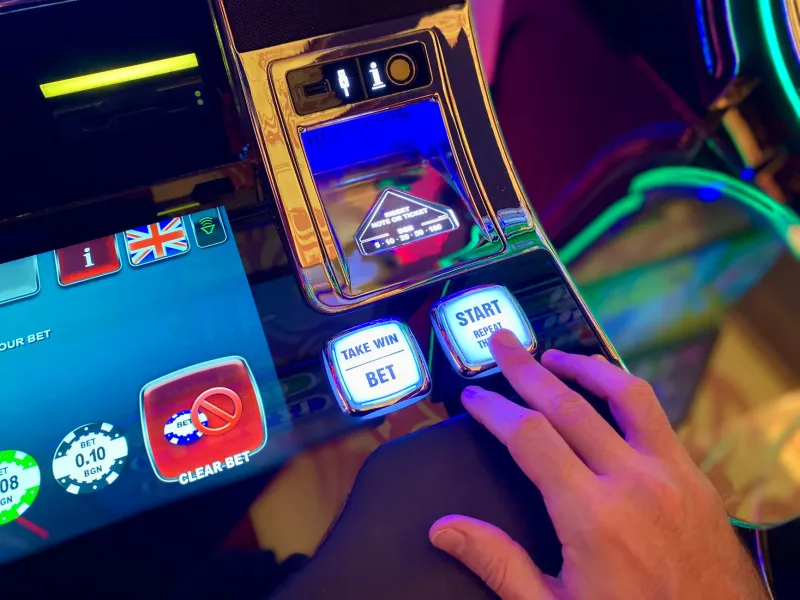
There's a certain kind of player at every casino — digital or otherwise — who treats the spin button like it owes them money. Rapid-fire taps, barely a breath between reels settling, a rhythm that would make a drummer jealous. The logic, if you asked them, usually goes something like: more spins, more chances, more wins.
It's an appealing idea. It feels productive. It feels like strategy.
It isn't.
What Actually Determines Your Odds
Before we get into the speed question, let's ground ourselves in how spin-based games actually work. Every legitimate online slot or reel game operates on a Random Number Generator (RNG) — a constantly cycling algorithm that produces a new, statistically independent outcome every single time you hit spin. The RNG doesn't rest between rounds. It doesn't remember your last spin. It has zero awareness of how long you waited before triggering the next one.
The other number that matters is RTP — Return to Player. This is the theoretical percentage of wagered money a game pays back over an enormous sample of spins. A game with a 96% RTP will, over millions of spins, return $96 for every $100 wagered. That percentage is baked into the game's design and doesn't fluctuate based on your personal spin tempo.
So right out of the gate: spin fast, spin slow, take a coffee break between rounds — your per-spin odds are identical every single time.
The Superstition Factory
So where does the speed myth come from? Mostly from the same place most gambling superstitions live: pattern recognition in a pattern-free environment.
Human brains are relentlessly good at finding connections. When a player goes on a hot streak while spinning quickly, the brain logs it: fast spins = wins. When a slow session ends badly, that data point gets filed under too cautious, too slow. The losing streaks during fast play? Those get rationalized away or forgotten entirely. Psychologists call this confirmation bias, and it's one of the most well-documented forces in gambling behavior research.
There's also the illusion of control at work. When you're actively doing something — clicking faster, timing your spins, developing a ritual — it feels like you're exerting influence over an outcome. That feeling is real even when the influence isn't.
Where Speed Actually Does Matter
Here's where things get genuinely interesting: while spin speed doesn't touch your statistical odds, it absolutely changes your experience — and not always for the better.
Bankroll burn rate is the big one. Let's say you're playing a $0.50 per spin slot. At a relaxed pace — maybe 200 spins per hour — you're cycling through $100 an hour. Crank that to 600 spins per hour (which is entirely possible with autoplay or rapid manual clicking) and you're burning through $300 in the same window. Your odds per spin haven't changed, but your exposure has tripled.
This is why casinos — both physical and digital — have historically encouraged faster play. More spins per hour means more handle (total money wagered), which means the house edge gets more opportunities to do its mathematical work.
Stress and decision-making also suffer at high speeds. A 2021 study published in the Journal of Gambling Studies found that players engaged in rapid, continuous play showed reduced ability to assess their own spending and were less likely to take voluntary breaks. Fast play essentially shortcuts the mental checkpoints that keep gaming recreational rather than compulsive.
The Autoplay Conversation
Autoplay features deserve their own mention here. They're the ultimate expression of speed-focused play — set it, forget it, watch the balance move. Some players love them for convenience. Others use them specifically because they believe removing human hesitation improves outcomes.
Again: the RNG doesn't care. But autoplay does remove a natural friction point — the moment between spins where you might notice your balance, reassess your session, or simply decide you're done. Several European regulators have actually moved to restrict autoplay features for exactly this reason, citing player protection concerns. In the US, regulations vary by state and platform, but it's worth knowing what you're giving up when you hand the controls over.
Spinning Smarter, Not Faster
If speed doesn't help your odds, what actually does? A few things worth building into your sessions:
- Set a per-session spin limit, not just a dollar limit. This keeps your pace honest regardless of bet size.
- Use the pause. Deliberately slowing down between spins gives your prefrontal cortex time to stay in the driver's seat instead of your impulse brain.
- Track your RTP before you play. Games with higher RTPs give you statistically more playtime per dollar over the long run. That's a real advantage, unlike spin timing.
- Treat autoplay with intention. If you use it, set hard stop-loss limits and check in manually every 50 spins or so.
The best spin isn't the fastest one. It's the one you made with clear eyes and a plan that survives contact with the reels.
The Bottom Line
Speed is a feeling, not a strategy. The RNG runs its own race, completely indifferent to your click rate or your lucky ritual. What spin velocity does affect — meaningfully — is how fast you move through your bankroll and how clearly you're thinking while you play.
At SpinBetter, we're big believers in playing smarter rather than just playing more. Understanding the actual mechanics of the games you love isn't just interesting — it's the foundation of every session that ends on your terms.